
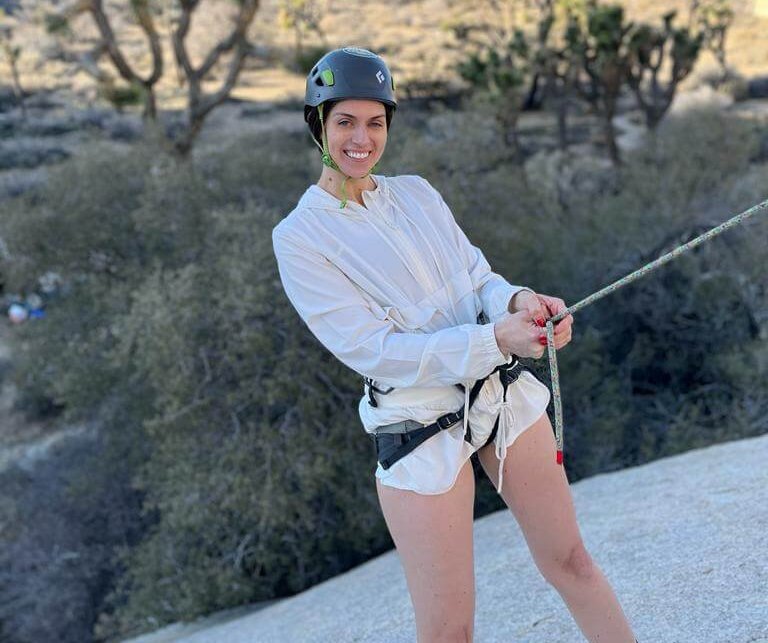
Thinking about trying rock climbing for the first time, but not sure what to expect? Maybe you don’t have a climbing partner, your friends have never been interested in climbing, or you’re simply looking for something new to try. Whatever brought you here, you don’t need previous experience to get started.
Our Women’s Rock Climbing Tour in Joshua Tree is designed for women who want to experience outdoor climbing in a supportive, beginner-friendly environment. You don’t need to know the terminology, own climbing gear, or arrive in great climbing shape. You’ll learn the basics as you go, with a guide helping you get comfortable on the rock.
And if you’re a little nervous, that’s completely okay. Your first climbing day isn’t about proving anything or reaching the top of every route. It’s about trying something new, learning at your own pace, and discovering what you’re comfortable with.
Here’s what your first day of Rock Climbing Guides in Joshua Tree can look like.

Why Try an All-Women’s Rock Climbing Tour?
One of the best things about climbing with an all-women group is having the space to learn at your own pace.
When you’re new to climbing, it’s easy to feel like everyone else knows what they’re doing. You might wonder if you’re asking too many questions, moving too slowly, or struggling with something that should be easy. A beginner-friendly group helps take some of that pressure away.
Everyone gets to learn the basics together, ask questions, and figure things out as they go. There’s no need to keep up with an experienced climbing partner or feel like you should already know how everything works.
You can ask your guide to explain something again, take a break when you need one, or decide that one climb is enough for the day. All of that is part of learning.
The pace of the day should reflect the people taking part, not an expectation that everyone needs to climb a certain number of routes or reach a particular height.
That’s what makes an all-women’s climbing experience appealing to many beginners. You get the chance to focus on your own experience while sharing the day with other women who may be working through the same questions and nerves.
If you’re curious about the broader benefits of the sport, you can also read our guide to the benefits of rock climbing.
What Should a Good First Climbing Day Look Like?
If you’ve never climbed outdoors before, it helps to know what to expect from a well-organized beginner experience.
Your day should begin with a proper safety briefing and time to get comfortable with the equipment. Your guide should explain how your harness works, how the rope system protects you, and what to expect before you leave the ground.
You’ll also learn some basic climbing techniques. That might mean figuring out where to place your feet, how to shift your weight, and how to use your legs rather than relying entirely on your arms.
Once you’re ready, you’ll move onto beginner-friendly routes suited to your comfort level and abilities. Your guide can offer tips as you climb, help you work through tricky moves, and adjust the challenge as you gain confidence.
There should also be plenty of time to rest, drink water, and take a break in the shade when conditions allow.
Some beginners want to try several routes. Others prefer to take things slowly and spend more time learning the basics. If you’re interested in learning how to belay a climbing partner, ask your guide whether that’s an option for your tour.
The important thing is that your first day gives you room to learn without feeling rushed.
Is Rock Climbing Hard for Beginners?
Rock climbing can look intimidating from the ground, especially when you’re watching someone move up a tall rock face. But you might be surprised by how much of climbing comes down to technique rather than raw strength.
On our guided beginner tours, climbing takes place on top rope. In this setup, the rope runs from your harness through an anchor above the climb and back down to your guide, who manages the rope from below. This provides protection if you lose your footing, although no climbing system eliminates every risk.
You’ll learn how to use footholds, balance your body, and move in a way that makes climbing more manageable. Instead of pulling yourself up with your arms at every opportunity, you’ll practice using your legs and finding stable positions before reaching for the next hold.
Your arms and forearms may get tired, particularly during your first session. That’s normal when you’re using muscles and movement patterns that might be unfamiliar.
You don’t need to arrive in climbing shape, and you don’t need to be exceptionally strong or flexible to try your first route. Starting with appropriate climbs and taking breaks can make a big difference.
If you’d like to learn more about what makes climbing challenging, check out our guide on is rock climbing hard for beginners?
What If I’m Nervous or Scared of Heights?
First, take a breath. Being nervous before your first climb is completely normal.
Even people who are excited to try climbing can feel anxious when they put on a harness and look up at the rock. Being interested in climbing doesn’t mean you have to feel comfortable with heights right away.
On a top-rope climb, your guide manages the rope from below to help protect you as you climb. If you feel uncomfortable, you can communicate with your guide and ask to be lowered. You don’t have to reach the top, and you don’t need to explain why you’d rather stop.
You can also take things one step at a time. Your first goal might simply be getting comfortable with the harness and rope, learning how the system works, and trying a few moves close to the ground before climbing higher.
Your comfort level may change throughout the day, and that’s okay. Some people become more confident after their first climb, while others prefer to keep their climbs short.
We won’t promise that your nerves will disappear as soon as you leave the ground. What matters is having a guide who listens, explains what is happening, and gives you the space to decide what feels right for you.
What to Wear and Bring
You don’t need a closet full of climbing gear to try outdoor rock climbing. A few comfortable essentials will help you enjoy the day.
- Wear comfortable clothes. Leggings, hiking pants, or other stretchy clothing work well because you’ll want to move your legs freely. Avoid anything that restricts your movement.
- Bring closed-toe shoes for the approach. Getting to the climbing area may involve walking over uneven desert ground. Your guide will provide climbing shoes for the actual climbing
- Dress for the weather. Joshua Tree mornings can be chilly during cooler months, even when the afternoon warms up. Bring a light layer that you can take off later.
- Protect yourself from the sun. Sunscreen, a hat, and sunglasses are useful in the desert, where shade can be limited.
- Bring plenty of water. Even if you’re only climbing for a few hours, spending time outdoors in the desert can be tiring. Drink regularly and take breaks when needed.
Climbing shoes, a harness, and a helmet are provided on our guided tours, so you don’t need to purchase equipment before your first experience.
If you decide you want to continue climbing afterward, our guide to [choosing climbing shoes] can help you understand what to look for when buying your first pair.
Why Joshua Tree Is a Great Place to Try Outdoor Climbing
Joshua Tree is known for its striking desert landscape and incredible rock formations, but it’s also a memorable place to experience climbing for the first time.
Much of the park’s climbing rock is quartz monzonite, a type of granite-like rock with a coarse texture. Depending on the formation and route, that texture can provide useful friction for your climbing shoes and help you find footholds as you learn to move across the rock.
Another advantage is that many climbing areas have relatively short approaches. You may only need to walk a few minutes from your vehicle to reach the climbing area, leaving more time and energy for climbing.
The park also has a wide variety of formations and routes. With the right route selection, a guide can choose terrain that matches your experience and comfort level.
And then there’s the setting itself. The warm colors of the rocks, the Joshua trees scattered across the desert, and the open landscape make the experience feel different from climbing indoors.
If you’ve only climbed in a gym before, outdoor climbing gives you a chance to experience natural rock and a completely different environment. If you’ve never climbed anywhere, Joshua Tree can be an exciting place to discover the sport for the first time.
Where Will You Climb in Joshua Tree?
Not every climbing area is ideal for a first-time climber. For beginners, the best locations generally offer manageable approaches, suitable routes, and enough nearby space to organize equipment and take breaks.
The area around Hidden Valley is one example of the kind of terrain that makes Joshua Tree a well-known climbing destination. Its surrounding formations offer a variety of climbing possibilities, including routes that may be suitable for learning with a guide.
The exact location for your tour depends on the group, the weather, wind, shade, and conditions at the time of your visit. Your guide can choose an appropriate area based on those factors rather than following a fixed itinerary regardless of the day’s conditions.
You don’t need to know the park’s climbing areas or choose a route yourself before arriving. That’s part of what your guide is there to help with.
Ready to Try Women’s Rock Climbing in Joshua Tree?
Your first climbing day doesn’t have to involve experience, perfect fitness, or a friend who already knows how to climb.
You can show up curious, ask questions, take breaks, and discover the sport one step at a time. If you’re nervous about heights or unsure how you’ll feel on the rock, you can start small and see how the experience unfolds.
At Joshua Tree Lizard, our Women’s Rock Climbing Tour is designed for women who want to experience outdoor climbing with professional guidance and a supportive approach to learning.
Whether you’ve been thinking about climbing for years or only recently decided to give it a try, we’d love to help you experience Joshua Tree from a different perspective.
FAQs
Do I need any climbing experience to join a women’s climbing tour?
No previous experience is needed. The tour is designed for beginners, and your guide will explain the equipment, safety procedures, and basic climbing techniques before you get started.
Do I need to be in good shape to try rock climbing?
You don’t need to be an experienced athlete or arrive in climbing shape. Climbing involves balance, coordination, technique, and strength, and you’ll have an opportunity to learn the basics on appropriate routes. Choose a pace that feels manageable and take breaks when you need them.
What if I’m scared of heights?
It’s normal to feel nervous before your first climb. Your guide can explain how the top-rope system works, help you get comfortable with the equipment, and let you know how to ask to be lowered. You can stop whenever you need to, and reaching the top isn’t a requirement for having a good day.
What should I wear for outdoor rock climbing?
Wear comfortable clothing that allows you to move freely, along with closed-toe shoes for walking to the climbing area. Bring sun protection, plenty of water, and a light layer if the weather calls for it. Climbing shoes, a harness, and a helmet are provided on our guided tours.
Where will we climb during the tour?
The location depends on your group’s experience, the weather, and the conditions on the day. Your guide will choose an appropriate climbing area with routes suited to beginners and the group’s comfort level.
Can I join if I don’t have a climbing partner?
Yes, you don’t need to bring an experienced climbing partner to try climbing. The women’s tour is an option for women who want to learn in a group setting without having to organize their own climbing partner or arrive with previous experience. Check the tour’s booking details for current group arrangements and availability.