
Rock climbing is an exciting and rewarding sport that combines physical fitness, mental problem-solving, and a deep connection with nature. However, one of the most common questions beginners ask is: How much does it cost to get into rock climbing? The answer depends on whether you plan to climb indoors or outdoors, and if you choose outdoor climbing, whether you’re interested in sport climbing or traditional (trad) climbing. This guide will break down the costs of each option to help you plan your climbing journey.
Cost of Outdoor Rock Climbing
Outdoor climbing requires more specialized gear and preparation than indoor climbing. The costs vary significantly depending on whether you are interested in sport climbing or trad climbing.
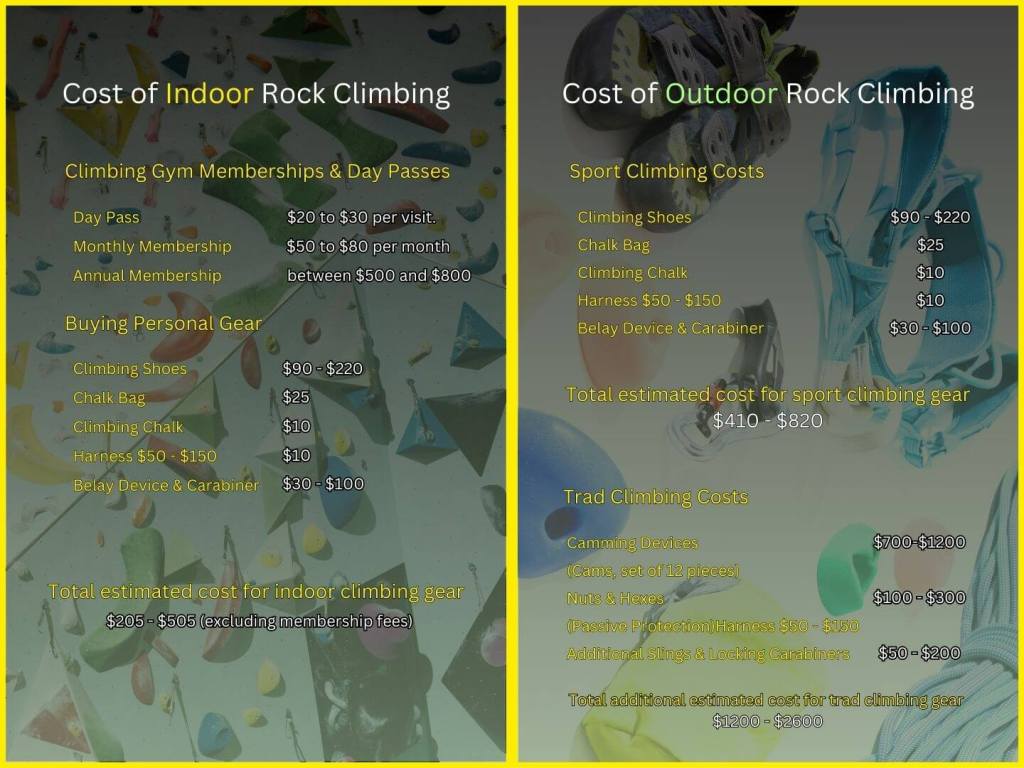
Sport Climbing Costs
Sport climbing involves climbing with pre-placed bolts for protection, making it a good step up from indoor climbing. The required gear includes:
- Climbing Rope (60-70m dynamic rope): $140 – $250
- Quickdraws (set of 12): $90 – $120
- Belay Device & Carabiner: $30 – $100
- Helmet: $50 – $100
- Harness: $50 – $150
- Anchor Slings & Carabiners: $50 – $100
Total estimated cost for sport climbing gear: $410 – $820.
Trad Climbing Costs
Traditional climbing (trad) requires placing your own protection, which increases the amount of gear needed. In addition to the items listed for sport climbing, trad climbers also need:
- Camming Devices (Cams, set of 12 pieces): $700-$1200
- Nuts & Hexes (Passive Protection): $100 – $300
- Additional Slings & Locking Carabiners: $50 – $200
Total additional estimated cost for trad climbing gear: $1200 – $2600
Cost of Indoor Rock Climbing
Indoor climbing gyms provide a controlled environment where beginners can practice and improve their skills before transitioning to outdoor climbing. The costs associated with indoor climbing include memberships, day passes, rental fees, and personal gear.
1. Climbing Gym Memberships & Day Passes
- Day Pass: If you’re trying climbing for the first time or only climb occasionally, most gyms offer day passes that range from $20 to $30 per visit.
- Monthly Membership: If you plan to climb regularly, a monthly membership is more economical. Prices typically range from $50 to $80 per month.
- Annual Membership: For dedicated climbers, an annual membership costs between $500 and $800, often including perks like guest passes and gear discounts.
2. Rental vs. Buying Personal Gear
Many climbing gyms provide rental equipment for beginners, but if you plan to climb often, investing in your own gear can be more cost-effective. Here is an estimated cost of buying gear:
cost of rock climbing equipments
- Climbing Shoes: $90 – $220
- Chalk Bag: $25
- Climbing Chalk: $10
- Harness: $50 – $150
- Belay Device & Carabiner: $30 – $100
Total estimated cost for indoor climbing gear: $205 – $505 (excluding membership fees).
Hiring a Guide or Joining a Rock Climbing Course
For beginners or those transitioning from gym to outdoor climbing, hiring a guide or taking a rock climbing instructional course can be invaluable. Guided climbing sessions provide instruction on safety, technique, and outdoor climbing skills while eliminating the need to purchase gear upfront.
Cost of Guided Climbing Tours & Courses
- Single Day Tour (4-8 hours): About $280 per person
- Multi-Day Course (2-3 days): $600 – $700 per person
Ways to Save Money on Guided Climbing
- Group Discounts: If you bring friends, the cost per person decreases significantly. For example, the cost of a single-day course can decrease from $280 for one person to $145 per person for a group of 3 people.
- Equipment Included: Most guided sessions provide all the necessary gear, meaning you don’t need to buy expensive equipment upfront.
Is Rock Climbing Expensive?
Some beginners are surprised by the initial costs of climbing, but when you break it down, the expenses make sense. Climbing gear is highly specialized, and designed for safety, durability, and performance, which naturally increases its cost. However, most recreational climbing gear lasts between 5 to 10 years based on manufacturer recommendations. When spread over time, the cost of gear becomes much more reasonable.
Additionally, professional guides and instructors undergo extensive training and certifications, ensuring safety and skill development for their clients. Climbing courses also include insurance and liability coverage, making them well worth the investment for beginners looking to learn the sport properly and safely.
Conclusion
While getting into rock climbing can be expensive, there are ways to minimize costs. Starting with indoor climbing and renting gear can help you gauge your interest before investing in personal equipment. If you prefer outdoor climbing, hiring a guide or joining a climbing tour allows you to learn safely while saving money on gear.
Climbing is more than just a sport; it’s an adventure that offers personal growth, fitness, and unforgettable experiences. Whether you’re scaling an indoor wall or a rugged cliff, the investment is well worth it.